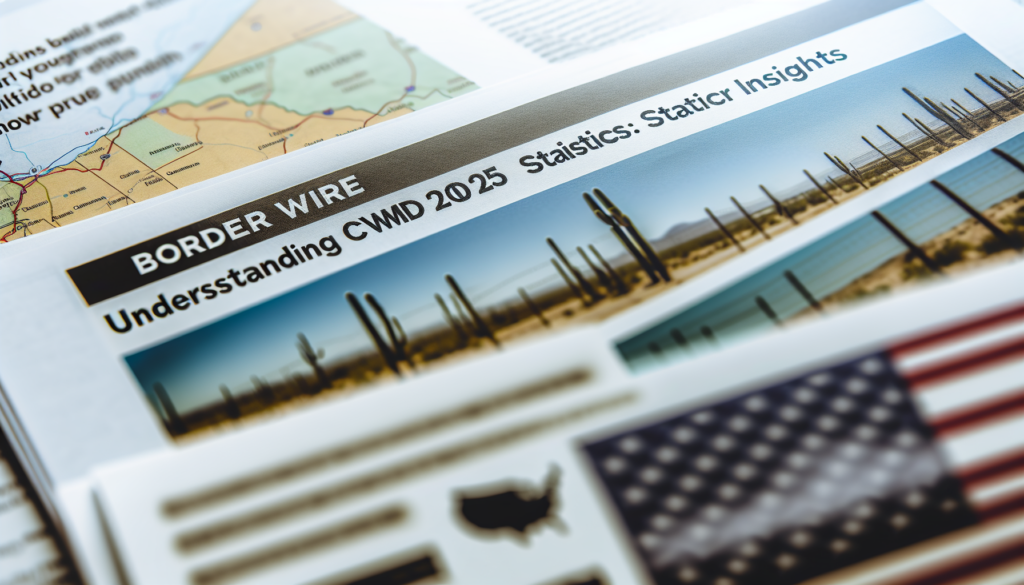
Overview of CWMD 2025 Statistics
What the CWMD 2025 Statistics Reveal About Border Dynamics
Don’t risk your case with unverified services. We’ll match you with a licensed immigration lawyer or accredited representative.
Find My Lawyer →Free case matching. No obligations. Only verified professionals.
A comprehensive look at the 2025 statistics from the CWMD and their implications for border and immigration policy.
1. Overview of CWMD 2025 Statistics
Key Findings from the Data
The CWMD 2025 dataset signals notable shifts in border activity, including changes in apprehension patterns and demographic composition across sectors. While the report does not present a single dominant narrative, it highlights concentrated activity in particular geographic areas and adjustments in the types of encounters federal agencies record. Border security experts note the report's value for understanding those shifts: "The CWMD 2025 statistics provide critical insights into border dynamics." The data serve as a baseline for officials, analysts and communities to compare current enforcement and humanitarian responses with prior reporting periods, and to identify where operational priorities and resource allocations have changed.
2. Key Findings from the Data
The CWMD report breaks the statistics into categories that include apprehensions, demographic details and geographic trends. Apprehension figures are cataloged by sector and by encounter type; demographic breakdowns show age and origin groupings; geographic data point to concentrated activity along specific border sectors. The report notes increases in apprehensions in certain sectors and relative decreases in others, suggesting shifting migration routes and enforcement focus. Analysts and border security practitioners say these patterns affect operational priorities. "We saw a significant rise in apprehensions in certain sectors," a border security expert said, underscoring how sector-level variation can change workload for ports, patrol stations and processing centers. The background in this section shows why those shifts matter for resource deployment and short-term planning.
Implications of the Findings
3. Implications of the Findings
Need help choosing an Immigration Lawyer?
We’ll connect you with a verified immigration lawyer who fits your case and location.
Start Free Case Review →The patterns in the CWMD 2025 statistics carry implications for immigration policy and border security planning. For policymakers, sector-specific rises or declines can prompt adjustments in personnel, detention capacity and coordination with state and local partners. For enforcement agencies, the distribution of encounters influences patrol strategies and logistical needs. Communities along affected sectors may see increased agency presence or service demands. "These statistics will inform future policy decisions regarding border security," an immigration policy analyst said, noting that data-driven decisions can shape both operational and legislative responses. The report does not prescribe policy, but it provides metrics officials can use when considering changes to enforcement posture or humanitarian outreach.
4. Immigration Context
Immigration Context
Understanding key immigration concepts clarifies how CWMD statistics relate to individual legal standing. Lawful presence generally refers to a noncitizen's authorization to be in the United States at a given time — for example, entry on a valid visa, parole, an approved asylum claim, or other forms of federal authorization. Lawful status refers to an immigration classification such as lawful permanent resident, nonimmigrant visa holder, or U.S. citizen. The CWMD statistics cover encounters that may include people with different legal statuses or claims; an apprehension recorded in the data does not by itself determine a person's final immigration status. Processing after an apprehension can include interviews, screening for protection claims and referral into removal proceedings depending on circumstances and applicable law. "Understanding lawful presence is crucial for interpreting these statistics," a policy analyst said, stressing that data reflect encounters, not adjudications.
5. Myth vs. Fact
The CWMD data counter several common misconceptions about border encounters. Myth: All apprehensions represent individuals without any legal basis to remain. Fact: Apprehensions include a range of encounters — people intercepted between ports of entry, individuals encountered at or near ports of entry, and persons seeking protection whose claims require evaluation. Myth: A single data point in CWMD determines final immigration outcomes. Fact: The statistics record encounters and processing events; subsequent administrative or judicial proceedings determine legal outcomes. As one expert put it, "Many believe that all apprehensions are illegal; however, this data shows a more complex picture." Accurate interpretation requires attention to the categories and definitions the CWMD uses.
Myth vs. Fact
6. Conclusion and Future Outlook
The CWMD 2025 statistics offer a detailed snapshot of border encounters that reveals shifting sector activity, demographic patterns and operational pressures. The report equips agencies, policymakers and communities with information to assess immediate needs and to monitor trends over time. Observed shifts in apprehensions and geography suggest migration pathways and enforcement focus may continue to evolve; officials and analysts will use ongoing data updates to refine responses. "The trends we see today may shape the future of border policy for years to come," a border security expert said, emphasizing the role of empirical data in shaping policy deliberations.
Note: The article summarizes themes and sections of the CWMD 2025 statistics as presented in the report. Specific numeric values and sector-level figures from the CWMD report should be consulted directly in the official CWMD publication for precise counts and rates.

Carlos Rodriguez Lopez — administrator
Find a Verified Immigration Lawyer Near You
Avoid scams. Get help from licensed professionals who understand your case.
Get Matched Now →Free case evaluation. We are not a law firm — we connect you with trusted, verified lawyers.