Overview of Emergency Declarations
Overview of Emergency Declarations
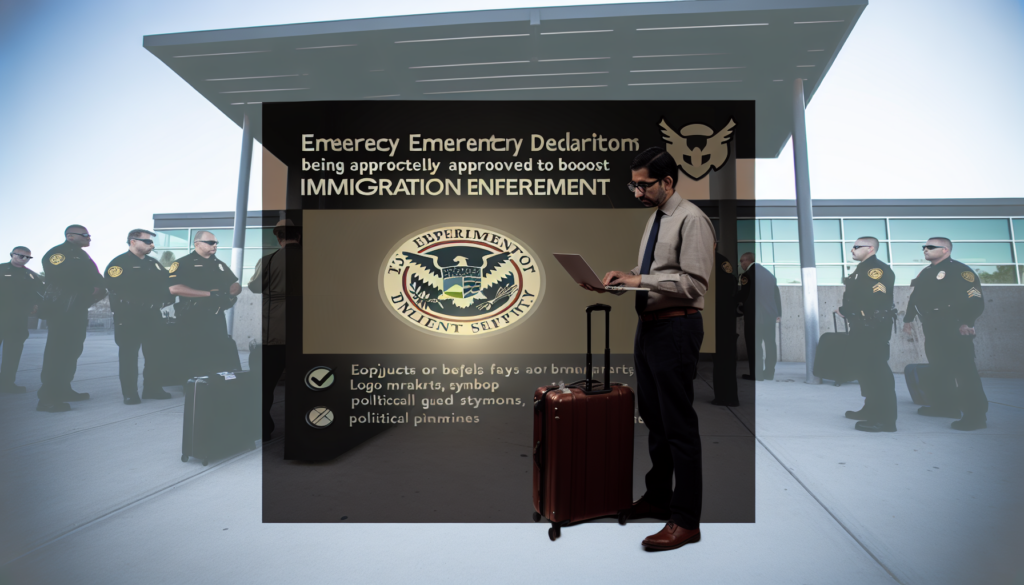
President Trump approves emergency declarations on January 25, 2026, aimed at enhancing immigration enforcement efforts led by state authorities. The declarations invoke federal measures intended to accelerate support and coordination with state and local law enforcement as part of an administration effort to address migration pressures at the U.S.–Mexico border. Administration officials describe the action as "part of a broader strategy to address immigration challenges," framing the declarations as a mechanism to mobilize resources more quickly toward enforcement operations while signaling stronger federal backing for state-led initiatives.
Don’t risk your case with unverified services. We’ll match you with a licensed immigration lawyer or accredited representative.
Find My Lawyer →Free case matching. No obligations. Only verified professionals.
Background on Immigration Enforcement
Background on Immigration Enforcement
Emergency declarations of this kind typically allow federal agencies to provide expedited resources and operational support to state partners, including personnel deployment, equipment, funding streams that move more quickly than standard appropriations, and streamlined approval processes for intergovernmental cooperation. The declarations announced on January 25 are presented by the administration as part of a national strategy to tackle ongoing immigration challenges by enhancing coordination between federal and state actors. Officials say "State officials are encouraged to utilize additional resources for immigration enforcement." The administration has not publicly specified the full list or quantities of resources that will flow to states; relevant federal guidance and any operational details are expected to appear through agencies such as the Department of Homeland Security and other implementing offices.
Who is Affected?
Who is Affected?
State and local law enforcement agencies are the primary immediate recipients of the declarations’ intended support, with the administration emphasizing increased operational capacity for jurisdictions that seek federal assistance. The declarations are framed as targeting undocumented immigration and enforcement operations; individuals without criminal records and immigrants who hold lawful status or lawful presence are not the stated targets of the measures. The declarations do not, in the administration’s description, change immigration eligibility rules for lawful immigrants or for persons who do not have criminal convictions.
Implications for Immigration Context
Implications for Immigration Context
Understanding the impact of the declarations requires clarity on terms such as lawful presence and lawful status. Lawful presence generally refers to a person’s temporary legal permission to be in the United States under immigration law — for example, as a visitor or temporary parolee — while lawful status refers to an ongoing immigration classification that grants authorization to live and work in the United States, such as lawful permanent resident status. Those distinctions matter because enforcement priorities and protections can differ for people with lawful presence or lawful status compared with those without legal authorization. The declarations signal that states may receive additional federal resources to enforce immigration laws, but the administration has not detailed how those resources will be conditioned by legal categories or how agencies will verify status and presence in individual cases.
Need help choosing an Immigration Lawyer?
We’ll connect you with a verified immigration lawyer who fits your case and location.
Start Free Case Review →Potential Real-World Impacts
Potential Real-World Impacts
If states and localities receive expanded resources and support, enforcement actions directed at undocumented immigrants may increase in scope or frequency in some jurisdictions. The administration’s framing suggests more federal-state operational cooperation, which could translate into more patrols, detentions, or transfers of individuals from local custody to federal custody where immigration violations are suspected. Local immigrant communities could experience significant operational and social impacts depending on how enforcement is implemented and coordinated at the state and local level.
Addressing Misinformation Risks
Addressing Misinformation Risks
Myth: All immigrants are criminals as a result of increased enforcement. Fact: The declarations, as described by the administration, focus on enforcement against undocumented immigrants and do not make criminality a blanket designation for all immigrants. Lawful immigrants and people without criminal records are not the declared targets of these measures. Clear distinctions in law between immigration status, lawful presence, and criminal conduct remain central to how enforcement is applied.
Open Questions and Future Considerations
Open Questions and Future Considerations
Key open questions include what specific resources—personnel numbers, funding levels, equipment, or legal authorities—will be allocated to states and how those resources will be distributed. The agencies implementing the declarations have not specified those details publicly, and the timing and terms of any resource deployments remain to be announced. Another outstanding question is how the declarations will affect local immigrant communities in practice: impacts will depend on operational decisions by state and local officials, their willingness to participate, and how federal agencies coordinate verification of immigration status in enforcement actions.
Conclusion
Conclusion
The emergency declarations represent a significant instance of federal support for state-led immigration enforcement, signaling expanded cooperation and a focus on expedited assistance. The long-term effects on immigrant communities and enforcement practices remain to be seen and will depend on the specific resources, conditions and implementation details that federal agencies and state partners make available in the coming weeks and months.

Carlos Rodriguez Lopez — administrator
Find a Verified Immigration Lawyer Near You
Avoid scams. Get help from licensed professionals who understand your case.
Get Matched Now →Free case evaluation. We are not a law firm — we connect you with trusted, verified lawyers.