Announcement of Enhanced Training
1. Announcement of Enhanced Training
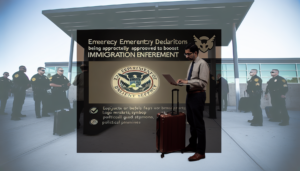
On January 22, 2026, Secretary Noem and President Trump announced a nationwide initiative to enhance training for federal law enforcement agencies. The administration frames the program as an effort to improve public safety and strengthen immigration enforcement across the country. Secretary Noem said the training will focus on operational capacity and readiness, adding, "This training is designed to equip our federal law enforcement personnel with the skills necessary to keep our communities safe." The announcement establishes a public timetable for rollout and signals increased federal emphasis on immigration-related operations, while providing limited detail on the specific instructional methods to be used.
Don’t risk your case with unverified services. We’ll match you with a licensed immigration lawyer or accredited representative.
Find My Lawyer →Free case matching. No obligations. Only verified professionals.
Background on Federal Law Enforcement Training
2. Background on Federal Law Enforcement Training
Federal law enforcement agencies, including U.S. Immigration and Customs Enforcement (ICE), have statutory responsibility for enforcing federal immigration laws. The administration’s announcement situates the new program within that existing authority, saying the enhancements will prioritize identification and action against high-risk individuals and organized criminal networks. Agency officials describe the focus as operational targeting rather than broad population-level enforcement. As an ICE spokesperson put it, "Our focus is on the worst of the worst, ensuring that our law enforcement can operate efficiently." The statement emphasizes that resources will be directed toward cases judged to present the greatest public-safety risk.
Who is Affected by the Enhanced Training?
3. Who is Affected by the Enhanced Training?
The training will apply directly to federal law enforcement personnel across participating agencies, including ICE officers and related support staff who carry out immigration enforcement and public-safety operations. The announcement also acknowledges indirect effects: immigrant communities may see heightened enforcement actions in areas where personnel trained under the program operate. An ICE spokesperson noted the agencies' awareness of local impacts, saying, "While our goal is improved safety, we recognize that increased enforcement may lead to tensions in immigrant communities." The administration indicates it will coordinate operational updates through agency channels as training is implemented.
Need help choosing an Immigration Lawyer?
We’ll connect you with a verified immigration lawyer who fits your case and location.
Start Free Case Review →Potential Real-World Impacts
4. Potential Real-World Impacts
Officials say the program could produce two primary outcomes: an increase in targeted enforcement actions against individuals and groups identified as high risk, and potential improvements in safety in communities with elevated crime rates. At the same time, officials and advocates have warned that increased enforcement activity can raise tensions and reduce trust between immigrant communities and law enforcement, which can complicate public-safety objectives. As an ICE spokesperson summarized the balance, "It's a balancing act; we want to ensure safety without alienating communities." The announcement does not detail specific metrics for measuring community impacts.
Immigration Context
5. Immigration Context
ICE’s statutory role in enforcing immigration laws underpins the significance of the training enhancements. Understanding that role—investigations, detention and removal operations, and targeting of criminal networks—is essential to grasp the implications of added training. The announcement does not specify eligibility criteria, changes to immigration-status determinations, or rules regarding expiration of policies tied to the training. The agency has not specified whether the training will change how immigration relief programs, visas, or lawful-presence determinations are handled. An ICE spokesperson said, "Understanding the role of ICE is essential for grasping the full impact of these training enhancements."
Addressing Misinformation Risks
6. Addressing Misinformation Risks
Public statements accompanying the rollout warn against conflating enhanced training with blanket targeting of immigrant populations. There may be a misconception that increased training equates to enforcement against all immigrants; officials emphasize the stated scope is focused on high-risk individuals and criminal organizations rather than all noncitizens. To clarify this point, an ICE spokesperson stressed, "It's important to clarify that enhanced training does not equate to targeting all immigrant populations." The agency also signals plans for community outreach and public information to reduce confusion about operational priorities.
Conclusion and Next Steps
7. Conclusion and Next Steps
ICE says it will continue providing updates on operational changes and on community outreach programs tied to the training rollout. The administration frames transparency and engagement as part of implementation; Secretary Noem said, "We are committed to transparency and community engagement as we implement these changes." For BorderWire readers, the story matters because changes to federal training and enforcement practice can affect local operations, community relations and public-safety dynamics along the border and in immigrant neighborhoods. Agencies have signaled ongoing briefings; communities and local officials will need timely information from ICE and Homeland Security officials to mitigate misinformation and monitor operational impacts.

Carlos Rodriguez Lopez — administrator
Find a Verified Immigration Lawyer Near You
Avoid scams. Get help from licensed professionals who understand your case.
Get Matched Now →Free case evaluation. We are not a law firm — we connect you with trusted, verified lawyers.