Don’t risk your case with unverified services. We’ll match you with a licensed immigration lawyer or accredited representative.
Find My Lawyer →Free case matching. No obligations. Only verified professionals.
New Smart Wall Contracts Announced
WASHINGTON — The Department of Homeland Security and U.S. Customs and Border Protection announced within the last 24 hours that they have awarded new contracts to deploy and expand the agency’s “Smart Wall” surveillance technology along the U.S.-Mexico border and other CBP sectors. DHS said the awards will fund sensors, towers, cameras, and analytics intended to increase situational awareness for Border Patrol operations. The announcement, issued on December 25, 2025, signals an accelerated push to widen remote surveillance coverage across multiple sectors.
The new awards raise immediate questions about procurement transparency, contract values, vendors and delivery schedules, and the operational and civil liberties impacts of expanded border surveillance. DHS/CBP conveyed the announcement in a press release stating the effort is designed to enhance situational awareness and support law enforcement operations along the border.
Contract documents on federal procurement portals and responses from contractors and stakeholder groups are pending and are cited throughout where available.
Introduction
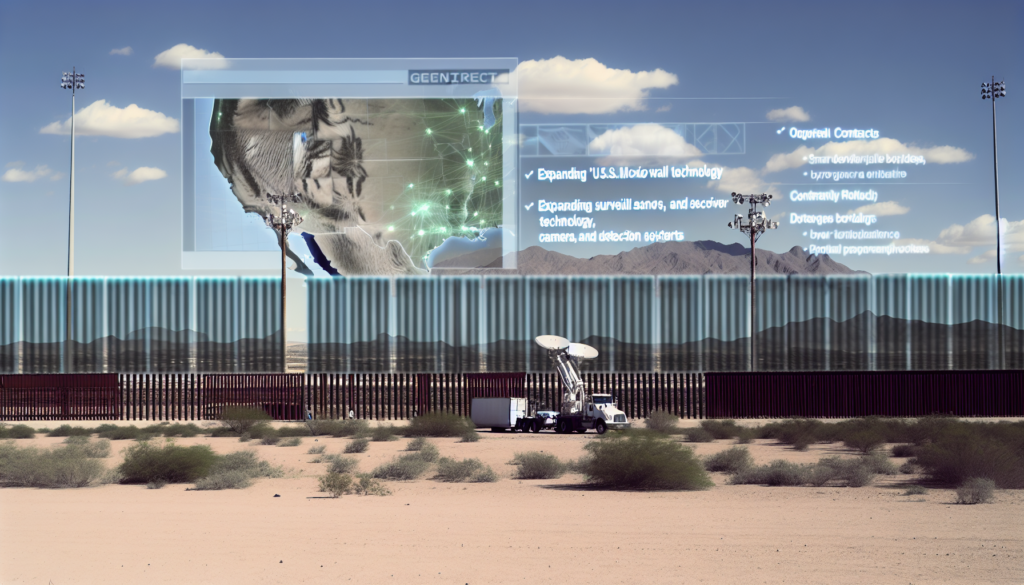
DHS and CBP released a statement late Thursday confirming multiple contract awards to expand the agency’s so-called Smart Wall — a system of ground and aerial sensors, fixed and mobile camera towers, radars and data-fusion platforms intended to detect and track cross-border movement. The initial agency notice describes planned deployments across several CBP sectors on the U.S.-Mexico border but stops short of listing the full set of award recipients, exact dollar amounts and detailed performance schedules. CBP framed the effort as an operational enhancement to support Border Patrol agents while reducing the need for routine foot and vehicle patrols in some areas.
CBP’s press release emphasized operational benefits and faster response time; it did not, however, attach the underlying contract award notices or the agency’s privacy assessment in the initial announcement. At the time of publication, SAM.gov and USAspending entries associated with the awards either are incomplete or have not been posted in full. Company spokespeople for likely contractor firms were contacted for comment; responses were delayed. This article reviews the public announcement, situates it within the Smart Wall program’s history, assesses available contract details, and explores procurement and civil-liberties implications.
Background: The ‘Smart Wall’ Program and Past Deployments
The Smart Wall concept began as an effort to stitch together sensors and analytics to provide remote detection and tracking along the border, first taking shape in pilot programs and buyouts in the late 2010s and expanding through the 2020s. Core components typically include fixed electro-optical/infrared (EO/IR) cameras, ground-based radars, mobile and fixed towers, unattended ground sensors, manned or unmanned aerial systems, and a data-fusion backbone that aggregates alerts for human operators and automated analysis.
Previous phases relied on contracts to several established defense and security integrators; over the years, firms known for perimeter security, telecommunications and defense electronics have taken part in deployments. The program has drawn scrutiny: Government Accountability Office and DHS Office of Inspector General reports across prior years highlighted procurement irregularities, uneven performance metrics, maintenance and sustainment cost growth, and insufficient transparency about footage and data retention. Civil-liberties groups and some local officials have also criticized deployments for encroaching on private lands and lacking clear public notice.
Technically, Smart Wall systems are designed to detect movement via radar cross-sections, thermal signatures and visual confirmation, then pass detections to analysts and a command center. Increasingly, DHS has integrated analytics that flag patterns or apply automated classification algorithms; these tools can reduce operator workload but raise questions about false positives, algorithmic bias and the standards for human review. Historical performance data publicly released by DHS has been partial: agency briefings have cited improvements in situational awareness and interdiction metrics but have not consistently published independent validation of detection rates or false-alarm frequencies.
Key Events and Details of the New Contracts
The agency announcement states contracts were awarded on December 25, 2025, to supply and install multisensor surveillance systems and to provide operations and maintenance support. According to the press notice, the scope includes fixed cameras and towers, ground sensors, radars and analytic software licenses that will be installed across multiple CBP sectors along the U.S.-Mexico border. The statement references delivery and sustainment services but did not attach contract numbers, award amounts or procurement vehicles.
As of publication, the full award documents on SAM.gov, FPDS and USAspending have not been posted or are incomplete; therefore the precise contractor identities, contract numbers, award types (for example, firm-fixed-price, indefinite-delivery/indefinite-quantity, sole-source or competitive awards), and detailed delivery schedules are not yet publicly available. CBP’s announcement indicates performance will begin in early 2026 with phased deliveries and installation milestones, but the agency has not released a sector-by-sector timeline or equipment counts.
The absence of immediate public contract files prevents independent verification of per-unit equipment quantities (towers, radars, fixed camera counts), stated models or manufacturers, and operations-and-maintenance cost projections. The PIA and System of Records Notice that would detail data categories, retention schedules, and sharing partners were not attached to the initial notice. BorderWire has submitted requests to DHS and CBP for the contracting documents, attached statements of work, and the privacy assessments and will update this report as those records become available.
Need help choosing an Immigration Lawyer?
We’ll connect you with a verified immigration lawyer who fits your case and location.
Start Free Case Review →Policy and Procurement Implications
The timing and structure of these awards raise oversight questions. Rapid awards near the end of a calendar year or fiscal quarter can reflect urgent operational needs or accelerated procurement authorities — but they can also reduce congressional and public scrutiny. Without the contract justification documents, it is not possible to confirm whether the awards were competitively solicited or justified as sole-source emergency buys. If the awards are IDIQ task orders or multiple-award contracts, that structure will shape how future task orders are issued and how subcontractors participate.
Oversight bodies — including House and Senate Homeland Security committees, the GAO and DHS OIG — can request the contract package and conduct post-award reviews, particularly to examine cost estimates, lifecycle sustainment obligations, and contractor past performance. Budgetarily, capital outlays for equipment are only part of the long-term cost: recurring O&M, replacement cycles for sensors and towers, software licensing, and staffing for remote operations centers can outstrip initial procurement costs. Legislators and appropriators will need to weigh one-time procurement versus sustained operational funding when assessing trade-offs across DHS programs.
Legal and policy issues also loom. Deploying persistent surveillance raises questions about cross-border data sharing, jurisdictional boundaries, and whether the collection could have chilling effects on asylum seekers or on residents in border communities. Compliance with privacy statutes and executive orders requires robust PIAs and defined access controls; the lack of a publicly available PIA at announcement heightens concerns among privacy advocates and some members of Congress.
Human Impact and Civil Liberties Concerns
Expanded sensor coverage changes the practical experience of migrants, asylum seekers and border residents. Remote detection systems can increase the likelihood that movements away from official ports of entry are detected and interdicted; that in turn affects routes chosen by migrants and can shift risk to more remote and dangerous terrain. Civil-rights and immigrant-advocacy organizations argue that mass surveillance can deter asylum-seeking behavior, hinder due-process access and disproportionately affect communities of color.
Tribal governments and private landowners have previously raised concerns when towers or sensors were sited on or near tribal lands and private ranches. The placement of infrastructure, access easements and coordination with local authorities are recurring flashpoints. Local elected officials and community leaders have also asked for public briefings on siting, data collection and complaint mechanisms.
Privacy advocates emphasize several specific risks: incomplete notice to affected populations, broad data retention windows that permit long-term storage of location and image data, potential automated decision-making that could flag individuals without human review, and data-sharing arrangements with state, local or foreign partners that could expand use beyond border-security purposes. An ACLU representative said civil-liberties groups are watching closely and called for full public disclosure of PIAs, detailed retention schedules and independent audits of analytics that could affect civil rights.
Border Patrol officials and unions have countered that expanded sensor networks allow for more targeted use of personnel, reduce unnecessary patrols in hazardous terrain and improve officer safety. A Border Patrol representative stated the systems are tools to augment — not replace — field agents, and to improve response times to actual incursions. Detailed operating procedures, however, were not released with the announcement, leaving open questions about rules of engagement, referral decisions and how surveillance alerts translate into enforcement actions.
Future Outlook and Operational Questions
Key milestones to watch include publication of the complete contract packages on SAM.gov and USAspending, the release of associated PIAs and SORNs, and the posting of delivery and acceptance criteria for the equipment. Congressional staff and oversight offices are likely to request briefings and copies of the full contract files. Independent technologists will also seek access to test and evaluation reports that explain detection thresholds, false-alarm rates and algorithmic performance.
Outstanding operational questions include the total lifecycle cost of the program, the performance metrics DHS will use to judge effectiveness, and how alerts will be triaged between automated systems and human reviewers. Interoperability with state, local and other federal systems — along with policies governing data-sharing — remain unresolved. The program could proceed under three foreseeable scenarios: a fast-tracked rollout with limited public oversight, incremental sector-by-sector deployments with monitoring and adjustments, or legal and oversight challenges that delay full implementation.
Find a Verified Immigration Lawyer Near You
Avoid scams. Get help from licensed professionals who understand your case.
Get Matched Now →Free case evaluation. We are not a law firm — we connect you with trusted, verified lawyers.