1. FEMA's Historic Funding Announcement
Don’t risk your case with unverified services. We’ll match you with a licensed immigration lawyer or accredited representative.
Find My Lawyer →Free case matching. No obligations. Only verified professionals.
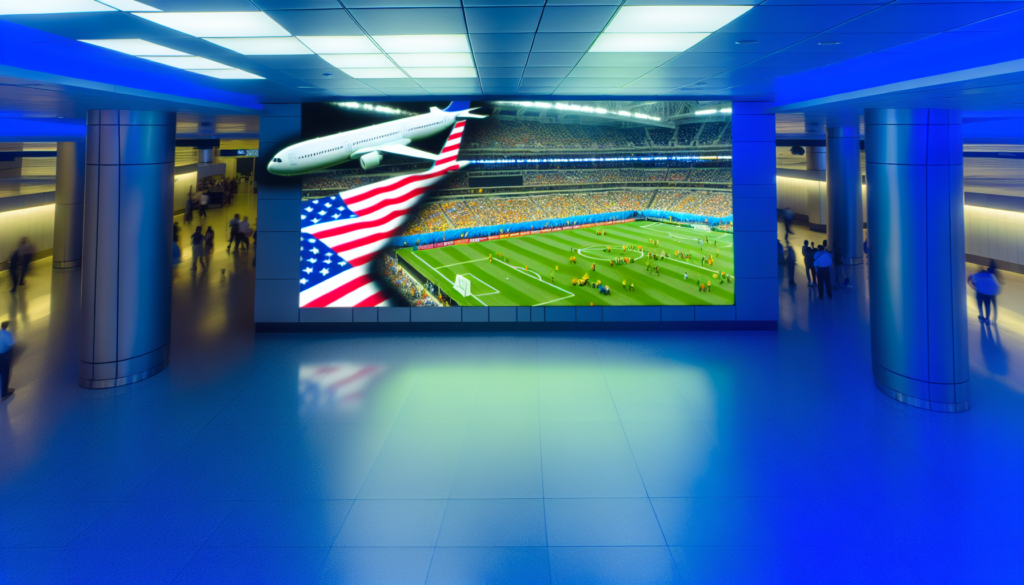
The Federal Emergency Management Agency has awarded $250 million to support security enhancements ahead of the FIFA World Cup 2026, an announcement made on January 3, 2026. FEMA frames the allocation as a timely measure intended to strengthen airspace and event security as the United States prepares to host matches as part of the tri-nation tournament. FEMA officials describe the award as part of an urgent push to ensure safety during major international events, noting the agency's commitment to enhancing protective measures in coordination with local and federal partners.
2. Context and Background of the Funding
FEMA routinely provides funding for disaster response, preparedness and security enhancements, and this $250 million allocation fits within that broader remit. Funding for large-scale events typically supports coordination among federal, state and local entities, and FEMA positions this award as part of a strategy to prepare for the logistics and risks associated with major public gatherings. Officials and agency documents emphasize that the funding is intended to bolster capabilities that apply to a range of large events, with the World Cup cited as the immediate impetus for accelerated planning and resource deployment.
3. Who is Affected by the Funding?
Individuals and organizations involved in the FIFA World Cup — including traveling fans, competing teams, tournament staff and local businesses in host cities — will be directly affected by the security measures enabled by the funding. Host-city transportation hubs and event venues are likely primary focal points for security upgrades, which can influence arrival and departure procedures, access to venues, and the flow of visitors within downtown and stadium areas. Local businesses near host venues may encounter increased presence of security personnel and temporary changes to access and traffic patterns; those effects can create operational challenges as well as potential revenue opportunities tied to higher visitor volumes.
4. Who is Not Affected?
Residents and communities outside designated host cities are unlikely to feel direct impacts from this FEMA funding. Individuals who are not traveling to attend matches, and organizations not involved in event planning or local hospitality and transportation systems, should experience minimal change in day-to-day security procedures as a result of the award. FEMA and local authorities indicate that the allocation primarily targets areas and systems directly associated with the World Cup.
5. Real-World Impacts of Enhanced Security Measures
Need help choosing an Immigration Lawyer?
We’ll connect you with a verified immigration lawyer who fits your case and location.
Start Free Case Review →Enhanced security at airports, transportation hubs and event venues may lead to longer processing times and potential delays for attendees, particularly during peak arrival and departure windows tied to match schedules. Security deployments can require reconfigured queues, additional screening stations and the temporary rerouting of pedestrian and vehicular traffic around venues and transit nodes. The presence of extra security personnel and infrastructure also has economic effects: local businesses may face short-term disruptions due to altered access or increased inspections, while others may realize higher customer volumes tied to influxes of spectators. Security experts advising host jurisdictions emphasize that operational planning seeks to balance safety objectives with efficient movement of people and goods.
6. Immigration Context
Two immigration-related terms that matter for international attendees are lawful presence and lawful status. In plain language, lawful presence refers to a person’s permitted physical presence in the United States under immigration laws — for example, as a visitor, student, worker or permanent resident — and generally reflects whether someone is legally allowed to be in the country at a given time. Lawful status is a related concept that denotes the immigration classification or authorization a person holds, such as a nonimmigrant visa category or lawful permanent resident status; it determines the terms and conditions under which a person may live, work or study in the United States. The source material does not provide specific eligibility criteria, expiration rules, or new documentation requirements tied to the FEMA funding. Understanding these distinctions can matter for international attendees, but the agency has not issued immigration-specific guidance connected to the security allocation.
7. Addressing Misinformation Risks
Some observers may speculate that this FEMA funding is linked to expanded immigration enforcement at ports of entry or event venues. That interpretation is not supported by the information released with the award. The funding is described as targeting event and airspace security rather than immigration enforcement activities. It is important to differentiate between event security operations and immigration enforcement authorities: FEMA’s announced allocation focuses on protective and logistical measures for the World Cup, and the agency has not stated that the funds are designated for broader immigration enforcement initiatives. Clarifying this distinction is necessary to prevent conflation of distinct policy areas.
8. Open Questions and Future Implications
Key questions remain about how the $250 million will be spent in practical terms. The agency has not specified the precise security measures that will be funded, nor has it published a line-item breakdown of expenditures. Officials and local partners are expected to provide further detail on whether funds will support technology upgrades, staffing, training, infrastructure modifications at airports and venues, or other specific activities. It also remains unclear how local law enforcement policies and operational protocols will be adjusted during the tournament window; those determinations typically involve coordination among municipal authorities, state agencies and federal partners, and may vary by host jurisdiction. FEMA indicates that additional guidance and implementation plans will follow as planning progresses.
9. Conclusion
FEMA’s $250 million allocation represents a proactive federal investment aimed at strengthening security measures ahead of the FIFA World Cup 2026. The award underscores the logistical and safety considerations that accompany large international events and will involve coordination among FEMA, local governments, security agencies and private-sector partners. Stakeholders — including event organizers, transportation providers and local businesses in host cities — should monitor forthcoming announcements for specifics on funded measures and operational impacts. As one security advisor noted, "Safety is paramount as we prepare for one of the largest sporting events in the world."

Sebastian Rodriguez — author
Find a Verified Immigration Lawyer Near You
Avoid scams. Get help from licensed professionals who understand your case.
Get Matched Now →Free case evaluation. We are not a law firm — we connect you with trusted, verified lawyers.