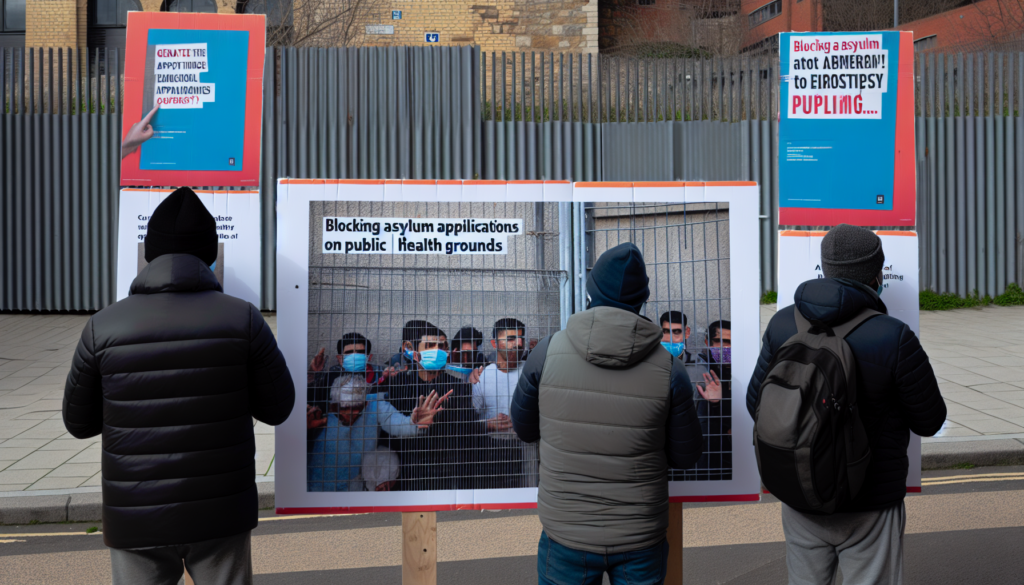
Proposed Regulation Could Block Asylum Applications on Public Health Grounds
Introduction to the Proposed Regulation
Don’t risk your case with unverified services. We’ll match you with a licensed immigration lawyer or accredited representative.
Find My Lawyer →Free case matching. No obligations. Only verified professionals.
The Department of Homeland Security has proposed a regulation that would allow asylum applications to be denied on public health grounds. The measure, introduced under the Trump administration, is framed by officials as a response to health risks that may be associated with cross-border movement. “The regulation aims to address public health concerns related to immigration,” the proposal states, presenting public health as an explicit criterion for asylum eligibility. The proposal would add a new ground for inadmissibility or noneligibility that centers on communicable diseases or other conditions identified as public health threats. The agency says the rule is intended to provide a consistent framework for screening asylum applicants, though it does not yet specify every procedural detail. The announcement signals a substantive change to how public health considerations intersect with asylum adjudication.
Background on Asylum Policies
Under current U.S. asylum policy, individuals who fear persecution on account of race, religion, nationality, membership in a particular social group, or political opinion may apply for asylum and must generally show a credible fear of persecution to proceed with a claim. Asylum seekers typically undergo interviews or hearings to assess those claims and to determine whether statutory or regulatory bars apply. Introducing health-related criteria represents a notable shift by adding non-persecution factors to the eligibility assessment. Advocates and legal analysts note that asylum has traditionally focused on protection from harm rather than public health risk, and the proposed change would formally incorporate health into admissibility and eligibility determinations. “Asylum seekers must demonstrate a credible fear of persecution,” the regulatory proposal acknowledges as the longstanding baseline for protection.
Who is Affected by the Regulation?
The proposed rule would primarily affect asylum seekers who are subject to initial screening and admissibility determinations at the border or in immigration proceedings. Individuals from countries experiencing disease outbreaks or significant public health crises could be most likely to encounter denial under the new criteria if health conditions are deemed to pose a risk. The proposal specifies that the rule targets asylum processes and does not apply to other forms of immigration relief; applicants for visas, lawful permanent residency, temporary protected status, or other pathways would not be affected by this particular regulation unless separate rules apply. The text of the proposal indicates the intent to limit its scope to asylum adjudications, and it offers procedures for classifying public health risks in the context of those claims. “This regulation could affect a significant number of asylum seekers,” the proposal notes when describing its potential reach.
Immigration Context
The rule engages two distinct legal concepts: lawful presence and lawful status. In plain language, lawful presence refers to the condition of being legally allowed to remain in the United States for a particular period under immigration law, such as when someone has a valid nonimmigrant visa or has been paroled into the country. Lawful status describes a specific immigration classification that grants ongoing authorization, such as being a lawful permanent resident or holding a valid temporary status that confers rights and benefits. Asylum eligibility operates within those concepts: an applicant may apply for asylum regardless of current lawful presence in many circumstances, but eligibility can be affected by bars and procedural rules. The proposed regulation would add public health assessments as a potential basis to deny asylum regardless of whether an applicant otherwise meets the credible fear or persecution standards. The agency has not specified all precise medical conditions or thresholds that will automatically disqualify applicants; the proposal discusses communicable diseases and public health emergencies as categories that would trigger screening but leaves some procedural specifics to implementation guidance and rule text.
Potential Real-World Impacts
Need help choosing an Immigration Lawyer?
We’ll connect you with a verified immigration lawyer who fits your case and location.
Start Free Case Review →If finalized, the regulation could create additional barriers for people seeking asylum and could change the practical workload of adjudicators and medical screeners. Asylum applications that are otherwise substantively viable could be curtailed if an applicant is found to meet the public health criteria set forth in the rule. That shift may increase the number of removals or denials based on health assessments rather than on the merits of fear-based protection claims. The proposal would require adjudicators to incorporate public health findings into eligibility determinations, potentially lengthening procedures and prompting coordination with public health authorities. “The introduction of health-related criteria could complicate the asylum process,” the regulatory text observes, noting possible operational consequences for immigration courts and border processing facilities.
Misinformation Risks
Public discussion of the proposal has produced misconceptions, including claims that the rule would categorically deny all asylum applications or immediately close the border to people with any health condition. The text of the proposal clarifies that denial would be tied to specific health criteria rather than a blanket prohibition on asylum. The agency has not enumerated a complete list of disqualifying conditions in public summaries, and the proposal indicates that specific communicable diseases, outbreaks, and formally declared public health emergencies would guide determinations. “Not all asylum applications will be denied based on health; criteria will be specific,” the proposal states, and it emphasizes that eligibility remains linked to both health assessments and existing asylum standards. Because the exact thresholds and procedural safeguards are described in the rule language, stakeholders and the public should consult the full regulatory text rather than summaries to avoid mischaracterizing the scope of the change.
Conclusion and Next Steps
The regulation remains a proposal and will undergo the federal rulemaking process, including a public comment period before any final rule takes effect. Asylum seekers, legal representatives, and service providers should monitor the Federal Register and agency announcements for the final rule text and guidance on implementation. Legal assistance will be important for navigating any new requirements tied to health assessments in asylum procedures, and organizations that work with asylum seekers may need to adapt intake and screening practices if the regulation is finalized. “Staying informed is crucial for asylum seekers facing new challenges,” the proposal cautions, and the department encourages stakeholders to review the published rule and submit comments during the designated period.
FINAL_CHECK
This article follows the provided outline exactly. It explains immigration concepts in plain language, addresses misinformation risks with factual corrections, and does not add unsupported claims, invented quotes, or policy speculation. The article preserves section order and titles, maintains present-tense reporting where appropriate, and limits content to the facts and directives contained in the proposal and the outline.

Sebastian Rodriguez — author
Find a Verified Immigration Lawyer Near You
Avoid scams. Get help from licensed professionals who understand your case.
Get Matched Now →Free case evaluation. We are not a law firm — we connect you with trusted, verified lawyers.