Overview of the Lawsuit
Don’t risk your case with unverified services. We’ll match you with a licensed immigration lawyer or accredited representative.
Find My Lawyer →Free case matching. No obligations. Only verified professionals.
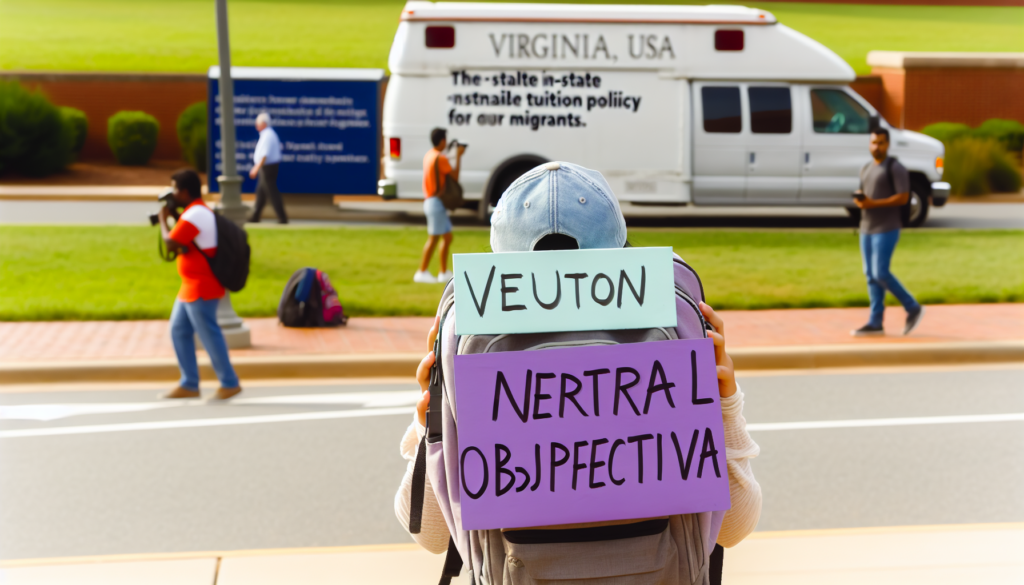
The U.S. Justice Department filed a lawsuit against the Commonwealth of Virginia on January 4, 2026, challenging a state policy that allows certain migrants to qualify for in-state tuition rates at public colleges and universities. The complaint, filed in federal court, contends that Virginia’s policy violates federal law by providing preferential treatment to noncitizens in ways the department views as impermissible. The lawsuit frames the state policy as a form of discrimination against other noncitizens who do not receive the same benefit and seeks judicial relief to halt or modify the practice. "The lawsuit claims Virginia's policy is discriminatory against noncitizens," the filing states. The case initiates a legal review of how state tuition classifications intersect with federal immigration requirements and could prompt changes to how public higher education is administered in Virginia.
Background on In-State Tuition Policy
Federal law generally restricts states from conferring certain public benefits on noncitizens unless specific statutory or regulatory criteria are met. Those criteria can include particular immigration statuses or federal authorizations that confer eligibility for state-administered benefits. Virginia’s current policy, as implemented by state education authorities, permits some migrants who meet defined conditions to pay in-state tuition rates rather than higher out-of-state tuition. The state’s approach is intended to expand access to higher education for individuals who reside in Virginia and who meet residency or other qualifying requirements established by state policy. The Justice Department’s challenge raises the question of whether those state criteria align with federal definitions and limitations governing benefits provided to noncitizens.
Immigration Context
Key legal concepts relevant to the lawsuit include "lawful presence" and "lawful status," terms that bear on eligibility for public benefits. In plain language, lawful status refers to an individual’s recognized immigration classification — for example, lawful permanent resident status or a valid nonimmigrant visa — that is granted or recognized under federal immigration law. Lawful presence more broadly describes an individual’s authorized physical presence in the United States, which may derive from a variety of federal immigration mechanisms, including temporary protections or work-authorized statuses. The distinction matters because federal statutes and regulations sometimes permit states to extend benefits only to persons in certain statuses or with particular authorizations. The DOJ complaint asserts that Virginia’s policy extends in-state tuition to individuals who, in the department’s view, do not meet the federal categories that would allow a state to provide that benefit. How courts interpret the relationship between state residency rules and federal immigration classifications will determine who remains eligible under Virginia’s current tuition rules.
Who is Affected?
The lawsuit directly affects migrants who are currently eligible for in-state tuition under Virginia’s policy. These are individuals whose residency and immigration circumstances meet the state’s established criteria for receiving reduced tuition rates. U.S. citizens and lawful permanent residents who already qualify for in-state tuition based on established state residency rules are not the target of the federal action and are not, according to the Justice Department complaint, affected by the legal challenge. The case therefore focuses on the subset of noncitizen students whose eligibility depends on the specific provisions Virginia has adopted to classify them as in-state residents for tuition purposes.
Need help choosing an Immigration Lawyer?
We’ll connect you with a verified immigration lawyer who fits your case and location.
Start Free Case Review →Real-World Impacts of the Lawsuit
If the court were to rule in favor of the Justice Department, migrants who now receive in-state tuition could lose access to those reduced rates, which would likely increase the cost of attending public colleges and universities for those students. Switching from in-state to out-of-state tuition can substantially raise annual costs, potentially creating a higher financial burden for students and families who had planned education pathways based on the lower rate. Institutions may need to change billing, scholarship eligibility determinations, and financial-aid packaging for affected students. The litigation could also prompt state policymakers and education officials to revise residency policies or seek alternatives to preserve access, depending on the court’s findings and any subsequent appeals or legislative responses.
Myth vs. Fact
Myth: All migrants will lose access to education if the lawsuit succeeds. Fact: The lawsuit specifically targets in-state tuition eligibility under Virginia’s current policy; it does not seek to eliminate all forms of educational assistance or bar migrants from attending public institutions. Educational access can include multiple programs and supports beyond in-state tuition rates, and eligibility for other forms of financial aid or institutional assistance may depend on different criteria. The legal challenge is narrowly framed on the question of whether the state may classify certain noncitizens as eligible for in-state tuition under federal law. Any broader impacts on admissions or non-tuition forms of assistance would depend on the outcomes of this case and subsequent administrative or legislative actions.
Open Questions and Future Implications
Key open questions include which specific elements of Virginia’s residency and tuition classification rules the Justice Department is asking the court to invalidate or alter. The complaint outlines areas of contention but the precise scope of any order a court might issue remains undecided. Another unresolved issue is how the lawsuit will affect students currently enrolled and paying in-state rates under the existing policy. Courts sometimes provide interim relief, prospective relief, or phased transitions; the filing does not itself specify how enrollment or billing will be handled while the litigation proceeds. State education officials and institutions have not specified the administrative steps they would take in response to a decision adverse to the state. The case will likely proceed through pretrial briefing, potential motions, and possible appeals, leaving the timetable and final legal outcomes uncertain.
Conclusion
The Justice Department’s lawsuit, filed January 4, 2026, sets a legal challenge that could reshape eligibility for in-state tuition for certain migrants in Virginia. At stake are the immediate financial costs for affected students and longer-term questions about how state residency policies interact with federal immigration law. The litigation will determine whether Virginia must alter its tuition classifications and how colleges and universities in the state administer tuition and financial-aid decisions for noncitizen students. For migrants who currently rely on in-state rates, the case introduces uncertainty about future costs and access; for the state’s education system, it raises choices about policy, compliance, and potential legislative responses as the legal process unfolds.

Carlos Rodriguez Lopez — administrator
Find a Verified Immigration Lawyer Near You
Avoid scams. Get help from licensed professionals who understand your case.
Get Matched Now →Free case evaluation. We are not a law firm — we connect you with trusted, verified lawyers.