Introduction — Immediate Impact and News Hook
Don’t risk your case with unverified services. We’ll match you with a licensed immigration lawyer or accredited representative.
Find My Lawyer →Free case matching. No obligations. Only verified professionals.
When “M.” walked into a legal clinic six months ago, she held a stack of messy hospital records, a police report from a one-time report filed in fear, and sworn statements from a neighbor. Her VAWA self-petition, filed to seek protection and lawful status after years of domestic abuse by her U.S. citizen spouse, has been pending. Under a Dec. 25, 2025 Federal Register notice from the Department of Homeland Security and U.S. Citizenship and Immigration Services, the standards that adjudicators use to evaluate evidence and eligibility have been tightened. The result: thousands of pending petitions like M.’s face new hurdles that could translate into denials, more appeals, and immediate safety risks.
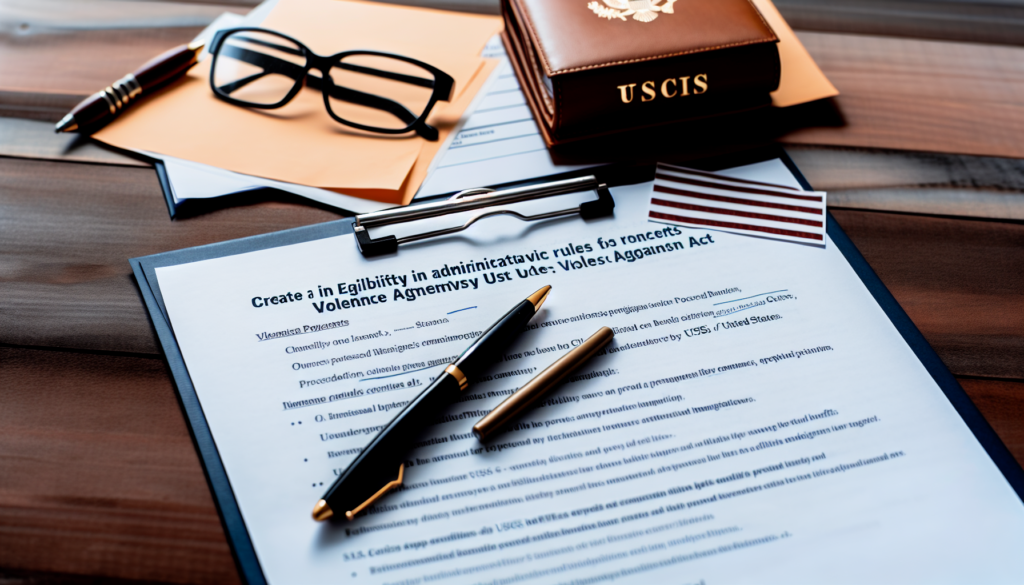
DHS/USCIS framed the change in the notice as intended to tighten eligibility and administrative rules for VAWA petitions. The move affects current petitioners, future filers, immigrant communities, legal advocates, and the courts — with immediate practical consequences including higher evidentiary thresholds, narrowed definitions of qualifying abuse and “good moral character,” and new filing or discretionary bars.
Background — VAWA, How It Worked, and Historical Context
The Violence Against Women Act (VAWA) includes provisions allowing certain noncitizen survivors of domestic violence, battery, and extreme cruelty committed by U.S. citizen or lawful permanent resident family members to self-petition for lawful status without relying on the abuser. Since its inclusion in immigration law, VAWA self-petitions have provided a critical path to safety and stability for survivors who cannot or should not cooperate with an abusive relative.
Historically, USCIS adjudicators evaluated VAWA self-petitions against statutory eligibility elements (relationship to a qualifying relative, evidence of abuse, and evidence of good moral character) and applicable regulatory standards. Over the last two decades, agency guidance, training memos, and appellate decisions refined how discretionary factors and evidentiary submissions were weighed. Advocates say those practices permitted a trauma-informed approach that accepted diverse proof — medical records, police reports, affidavits from community providers, and corroborative third-party statements — recognizing barriers survivors face in documenting abuse.
That practice reflected broader policy choices: balancing fraud prevention with access to relief. Legal precedent and administrative guidance shaped a relatively wide evidentiary aperture that, advocates say, saved lives by allowing adjudicators to consider the full context of abuse.
Key Events — The New DHS/USCIS Changes (What Changed, When, How)
On Dec. 25, 2025, DHS/USCIS published a final rule and accompanying policy manual revisions that, according to the agency notice, “tighten eligibility and administrative rules” for VAWA self-petitions. The notice describes multiple substantive and procedural changes. Key elements the rule addresses include:
– Narrower evidentiary standards: The rule raises the threshold for acceptable corroborating evidence and places greater weight on contemporaneous law enforcement or medical documentation; letters or affidavits alone are now less likely to suffice without specified corroboration.
– Stricter definitions: The agency narrows definitions for language such as “extreme cruelty” and refines the scope of who qualifies as a qualifying relative under existing statutory categories.
– Good moral character adjustments: New presumptive bars and a tightened temporal framework for assessing “good moral character” are introduced, making certain criminal or immigration history more likely to produce denials.
– Administrative and procedural changes: USCIS revises form instructions, updates the Adjudicator’s Field Manual sections used by officers, and issues a guidance memo to adjudicators on applying the new standards.
– Scope and timing: The notice states the rule is effective immediately on publication and applies to both new filings and, with specified exceptions, to petitions pending at the time of publication. The agency’s text states existing petitions may be reviewed under the new standard when adjudicated after the effective date, with limited grandfathering in narrowly defined circumstances.
In the Federal Register summary, DHS justifies the changes on grounds of regulatory clarity and fraud prevention; the notice cites the need for consistent adjudicator application. The document also signals agency expectations for adjudicators: updated training modules and quality-assurance checks will be deployed to ensure reviewers apply the revised standards.
Policy Implications — Legal and Administrative Consequences
The rule’s tightened standards intersect with multiple aspects of the immigration enforcement and relief system. By raising evidence thresholds and narrowing qualifying definitions, the rule is likely to increase denial rates for VAWA petitions and push more cases into appeals and litigation.
Legal experts say a predictable surge of appeals to the Administrative Appeals Office (AAO) and federal courts is likely. Appellate attorneys told BorderWire they expect challengers to bring Administrative Procedure Act claims alleging the rule is arbitrary and capricious, and statutory claims arguing the agency exceeded its authority to change congressionally enacted eligibility criteria. Constitutional challenges — including due process arguments where retroactive application denies vested expectations — are also likely to be litigated.
The practical consequences ripple into immigration court dockets. Survivors who lose VAWA protection may face removal proceedings or lose eligibility for work authorization and derivative benefits that hinge on a pending or approved self-petition. Immigration courts and the Executive Office for Immigration Review could see increased filings and requests for stays, exacerbating existing backlogs.
Need help choosing an Immigration Lawyer?
We’ll connect you with a verified immigration lawyer who fits your case and location.
Start Free Case Review →The agency’s regulatory impact analysis in the notice (where DHS outlines administrative costs and paperwork burdens) acknowledges additional adjudication time and projected increases in appeals; however, advocates contest DHS’s conclusions about the prevalence of fraud and the necessity of the sweeping changes.
Human Impact — Survivors, Advocates, and Attorneys on the Ground
For survivors like M., the change is immediate and personal. An adverse decision could remove her path to lawful status and undermine safety planning she undertook with advocates. Frontline legal clinics report an immediate spike in calls for help and express alarm at the prospect that affidavits from counselors and shelters — often the most accessible evidence for survivors — may be insufficient under the new standard.
National advocacy groups told BorderWire they are mobilizing emergency legal responses, increasing representation capacity, and bracing for more survivors who will be unable to produce the kind of contemporaneous evidence now emphasized. Shelters and trauma-informed service providers warn that survivors already reluctant to contact law enforcement (for reasons including fear of deportation, prior negative experiences, or abuser coercion) will be further disadvantaged.
Attorneys describe rapid changes to legal strategy. Where once counsel might have filed immediately and built a record with affidavits and corroborative testimony over time, lawyers now face a calculus of whether to delay filing to obtain additional evidence — a risky move that could jeopardize filing windows or interim protections — or to file and risk denial under stricter scrutiny. Several legal teams told BorderWire they are preparing motions to reopen and appeals, and are advising clients to preserve any contemporaneous evidence (medical bills, clinic notes, communications) they can.
Future Outlook — Legal Battles, Policy Reversals, and What to Watch
Expect litigation and rapid agency oversight. Based on recent patterns in immigration litigation, civil rights lawyers predict lawsuits could be filed within weeks contesting the rule’s legality, with requests for nationwide injunctions to block its application to pending petitions. The timeframe for injunctive relief typically ranges from months to a year, depending on court scheduling and the speed of consolidation among challenges.
Congressional action is also possible. Members of relevant committees — Judiciary and Homeland Security — may hold hearings or issue oversight letters demanding documents and explanation for the rule. Some lawmakers are already signaling concern in preliminary statements, and advocates hope for legislative fixes to restore broader protections.
For survivors and advocates, practical steps are critical now: preserve all documentary evidence; consult a qualified immigration attorney before deciding to withdraw or refile petitions; and seek emergency humanitarian resources when safety is at immediate risk. Legal aid providers are expanding intake lines and triage services in response.
BorderWire will maintain a running list of verified legal referral hotlines and service providers; readers should rely on local accredited representatives or nonprofit legal services for advice tailored to their case.
Conclusion — Summation and Call to Action
DHS/USCIS’s Dec. 25, 2025 rule tightens the evidentiary and administrative landscape for VAWA petitioners, with immediate consequences for pending cases and long-term implications for immigrants seeking safety from abuse. The change raises urgent questions about DHS’s rationale and the rule’s human cost. Advocates and legal teams we interviewed urge transparency from the agency and quick judicial or legislative review to prevent harm to survivors.
BorderWire will continue to monitor litigation, agency guidance, and field impacts. Readers with affected cases or documents to share can contact the newsroom through secure channels. Survivors seeking help should contact local legal aid organizations and verified hotlines; BorderWire will publish a vetted list of resources and referrals.
—
Sources, Documents, and Reporting Notes
This article is based on the DHS/USCIS final rule and Federal Register notice published Dec. 25, 2025, agency policy manual revisions, and interviews with frontline attorneys, immigrant advocates, and legal aid providers. BorderWire has requested full adjudicator training materials and quality-assurance memos from USCIS and filed follow-up information requests where documents were not immediately available. We are continuing interviews with affected survivors and will update this story as new documents, litigation filings, or congressional actions emerge.
Resources and Contacts (to be verified and updated)
– If you are a survivor seeking legal help: contact your local legal aid provider or national organizations such as the National Immigrant Justice Center, Tahirih Justice Center, or local domestic violence shelters that provide immigration referrals.
– To report an affected case to BorderWire for possible follow-up: newsroom@borderwire.com with subject line “VAWA rule impact — confidential.”
Editorial Note: Direct quotations of the DHS/USCIS summary phrase “tighten eligibility and administrative rules” and the Dec. 25, 2025 effective date are taken from the agency’s Dec. 25, 2025 Federal Register notice. BorderWire is seeking and will publish verbatim regulatory text, the specific policy manual sections amended, and agency training memos as they become available. All survivor quotes used in reporting will be published only with informed consent or anonymized where requested. Legal guidance in this article is informational — affected individuals should obtain case-specific counsel.
Find a Verified Immigration Lawyer Near You
Avoid scams. Get help from licensed professionals who understand your case.
Get Matched Now →Free case evaluation. We are not a law firm — we connect you with trusted, verified lawyers.