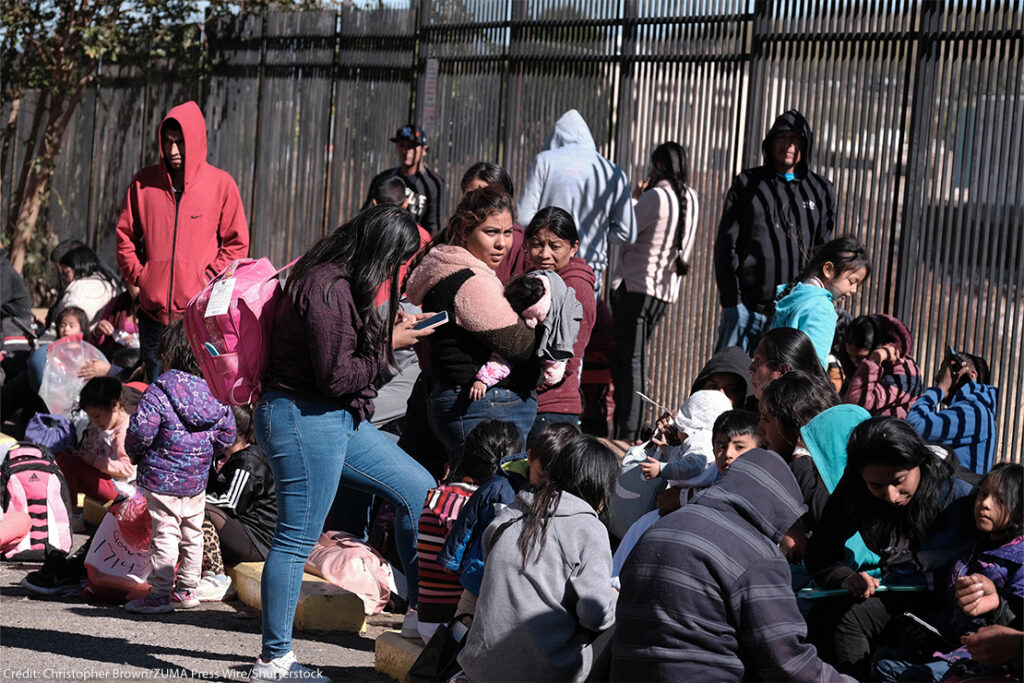
Inside the congressional exchange between Rep. Pramila Jayapal and economist Robert Lynch that dismantled one of the biggest myths in U.S. politics.
The Hidden Cost of Mass Deportations
When Representative Pramila Jayapal (D-WA) questioned Professor Robert Lynch, an economics professor emeritus at Washington State University, during a recent congressional hearing, she asked something few in Washington dare to phrase so plainly:
Don’t risk your case with unverified services. We’ll match you with a licensed immigration lawyer or accredited representative.
Find My Lawyer →Free case matching. No obligations. Only verified professionals.
“After mass deportations, you might expect that there are thousands of additional jobs for U.S. workers. But your research doesn’t really show that that happens. Can you explain why mass deportations cause such economic harm—such job loss for U.S. workers?”
Lynch’s answer dismantled one of the most persistent economic myths in American politics — the idea that deporting undocumented immigrants frees up jobs for citizens.
Instead, he argued, it destroys them. And his reasoning was both intuitive and irrefutable.
The Myth of “More Jobs for Americans”
At first glance, it seems like simple math: fewer undocumented workers means more openings for Americans. But as Professor Lynch explained, that’s not how real economies operate.
“There are several reasons,” he said. “One of which is widely understood by the American people, but the other is not so well understood.”
The first reason is familiar. Immigrant workers often fill jobs that Americans aren’t lining up to take. “People often say unauthorized immigrants take jobs Americans aren’t willing to do,” Lynch explained. “So if you remove them, the Americans aren’t going to move to the Central Valley of California to pick fruits and vegetables.”
But beyond those visible examples lies a deeper — and far more consequential — truth about what happens when millions of people are forcibly removed from the workforce.
The Demand-Side Domino Effect
Economists call it the demand-side effect, and Lynch outlined it clearly for lawmakers.
“There are about eight million unauthorized workers in the United States,” he said. “They earn hundreds of billions of dollars every year. They spend that money on food, clothing, rent, and more. If you take those people out, those hundreds of billions of dollars in spending go away.”
That loss doesn’t happen in isolation. Every dollar spent by a worker circulates through the economy — paying someone else’s wages, funding a business’s growth, or keeping a store open. Remove those workers, and you remove consumers, not just employees.
When spending collapses, businesses sell less. When they sell less, they cut production. And when production slows, American workers lose their jobs too.
The same restaurants, construction firms, farms, and retailers that once thrived on immigrant labor now face fewer customers, fewer contracts, and tighter margins.
It’s not about ideology. It’s arithmetic.
Complementary Workers, Not Competitors
The second — and perhaps more misunderstood — point Lynch made is that undocumented workers don’t compete with most U.S. citizens. They complement them.
“People seem to think unauthorized immigrants are close substitutes for American workers,” Lynch explained. “But that’s not the way the labor market works.”
Economists studying the U.S. labor force for over two decades have repeatedly found that immigrant and native-born workers often depend on one another to perform different roles that together sustain an industry.
“If you strip out, for example, in a restaurant, the three or four workers in the back who are chopping vegetables and cleaning, and you can’t replace them,” Lynch said, “then the American workers who may be waiters or managers lose their jobs as well.”
Without kitchen staff, restaurants can’t operate efficiently. Without farmworkers, there’s no harvest for truckers to haul or grocers to stock. Without construction laborers, project managers and suppliers lose work.
When one link in the chain disappears, the entire system falters.
Lynch added an analogy every lawmaker could understand:
“All of you have staff. You have excellent staff. If we suddenly take away 25% of your staff, you’re not going to be as productive as you are now — and you’re not going to do as well.”
When Enforcement Meets Economics
History provides painful proof of this principle.
In 2011, Georgia enacted strict immigration enforcement laws that led thousands of farmworkers to flee the state. The result: millions of dollars’ worth of crops rotted in the fields. Farmers couldn’t find enough local replacements, even after raising wages by 40%.
Need help choosing an Immigration Lawyer?
We’ll connect you with a verified immigration lawyer who fits your case and location.
Start Free Case Review →The same pattern emerged in Alabama, Arizona, and Texas, where heightened deportation crackdowns created immediate labor shortages in construction, hospitality, and food processing.
In each case, the goal was to “open jobs for Americans.” The outcome was lost productivity, higher consumer prices, and a shrunken tax base.
A 2020 study by the Center for American Progress estimated that removing all undocumented workers from the U.S. economy would shrink the GDP by $4.7 trillion over ten years — while costing the federal government hundreds of billions in lost tax revenue.
Meanwhile, the deportation process itself — detention, transportation, and enforcement — carries its own staggering price tag, often over $10,000 per person.
It’s an expensive illusion: a policy that costs taxpayers billions to destroy economic value.
A Symbiotic Workforce
Contrary to the narrative of competition, immigrant and U.S.-born workers often form a symbiotic partnership. Undocumented workers tend to fill labor-intensive roles that enable businesses to scale, creating supervisory, managerial, and technical positions for citizens.
They also contribute more than labor. According to the Institute on Taxation and Economic Policy, undocumented immigrants pay an estimated $12 billion annually in state and local taxes. They rent or own homes, buy cars, send their kids to school, and support local economies.
Their presence keeps communities alive — especially in rural regions struggling with population decline.
When deportations ramp up, towns lose not only workers but also customers, students, and taxpayers. Property markets cool. Schools lose funding. Hospitals see less revenue.
In short, mass deportations hollow out the very communities they claim to protect.
Why This Matters Now
The debate over immigration has never been just about borders — it’s about the future of the American economy.
Representative Jayapal’s question came at a critical moment. As the United States faces persistent labor shortages in agriculture, construction, and healthcare, proposals for sweeping deportations are resurfacing in political rhetoric.
Yet the evidence presented by experts like Professor Lynch paints a starkly different picture: removing millions of workers doesn’t free up jobs; it eliminates the demand that sustains them.
It’s a self-inflicted wound that slows growth, shrinks businesses, and costs American workers their livelihoods.
Jayapal’s exchange with Lynch was more than a policy debate — it was a reality check. The professor’s testimony served as a reminder that economies aren’t zero-sum games; they’re complex ecosystems built on interdependence.
The Real Lesson: Growth Through Inclusion
The United States has long thrived not by exclusion, but by integration. Every wave of immigrants — documented or not — has fueled economic growth, innovation, and resilience.
When the government removes hundreds of thousands of people from the labor force, it’s not solving a problem; it’s creating one.
“When you take out these hundreds of thousands of undocumented workers,” Lynch concluded, “not only do they lose their jobs — authorized immigrants often lose theirs, and American citizens lose theirs, usually in roughly equal numbers.”
That’s not just theory. It’s the lived experience of American industries from coast to coast.
The choice facing policymakers isn’t between protecting American jobs or keeping undocumented workers — it’s between economic expansion and economic self-sabotage.
To build prosperity, America must value every worker who contributes to its success, regardless of status. Because when those workers vanish, so does a piece of America’s strength.
Find a Verified Immigration Lawyer Near You
Avoid scams. Get help from licensed professionals who understand your case.
Get Matched Now →Free case evaluation. We are not a law firm — we connect you with trusted, verified lawyers.